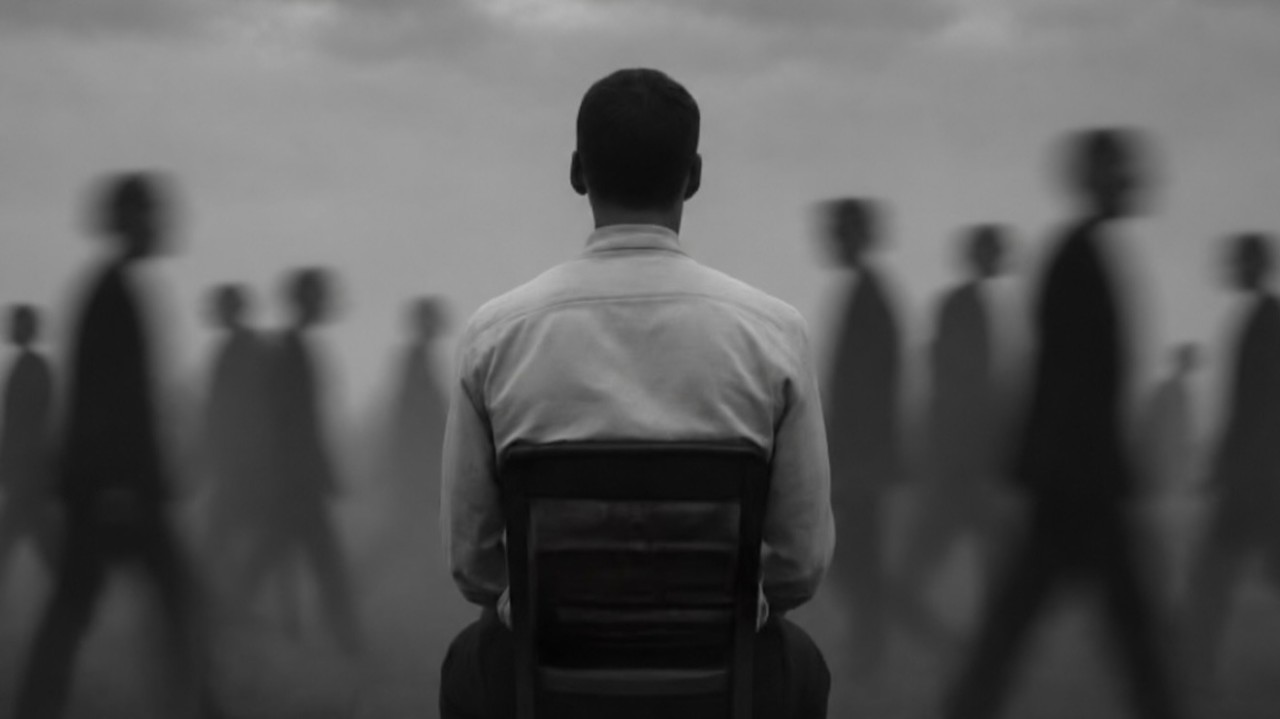
When I enter an organization, the first thing I avoid is proposing solutions.
It is almost always too early.
An organization chart describes how the business is supposed to work.
Governance describes how decisions are supposed to be made.
A procedure describes how a process is supposed to work.
But none of these elements, on its own, describes how the organization actually works.
To understand that, you need to observe.
Who is involved before important decisions.
Who is informed afterwards.
Who can slow everything down without formally having the power to do so.
Who has responsibility without authority.
Who has authority without accepting responsibility.
Who is listened to because of their expertise.
And who is listened to because nobody wants to contradict them.
Much of an organization’s ability to execute is determined by this gap between the formal organization and the real one.
Very often, so is the fate of its transformations.
Every organization has two organization charts
The first is the official one.
The second is never drawn.
It consists of relationships, dependencies, reputations, alliances, informal access, fears and influence.
And it is almost always the second that determines what actually happens.
You can redesign processes.
Change responsibilities.
Rewrite delegations of authority.
Introduce new governance.
But if you do not understand the invisible network holding the system together, you risk changing the architecture without changing how it works.
That is how many transformations become perfect on paper and irrelevant in practice.
The boxes change.
Meetings multiply.
Slides describe the change.
Then the organization continues to behave exactly as before.
Because organizational systems have a memory.
And organizational memory is often more resilient than any new organization chart.
Culture is what the organization tolerates
Not what it declares.
A behaviour repeated and never corrected becomes an implicit rule.
A decision continually postponed communicates something.
A manager who is not held accountable for results communicates something.
A talented person systematically ignored communicates something.
A problem known for years that nobody addresses communicates a great deal.
Ultimately, culture is not a set of values.
It is the cumulative result of what is rewarded, permitted, ignored and corrected.
That is why I observe what an organization tolerates far more closely than what it says it wants to become.
Silence is also data
There are meetings where everyone agrees too quickly.
Decisions that nobody challenges.
Problems everyone knows about that are gradually described in increasingly neutral terms.
When this happens, it rarely means there is no conflict.
It means the system has learned not to express it.
But an organization that eliminates dissent does not eliminate the problem.
It merely eliminates the place where the problem could surface.
The conflict then changes form.
It becomes delay.
Resistance.
Partial execution.
Decisions apparently accepted and subsequently neutralized.
What looks like an execution problem is often a problem of organizational truth.
Transformation begins with diagnosis
And a serious diagnosis is not about finding inefficiencies.
It is about understanding why those inefficiencies have been able to survive.
That is the question that changes everything.
If a problem has existed for years, awareness of its existence is almost never what is missing.
Something else is missing.
Ownership.
An incentive to act.
Managerial courage.
Or there is a balance of power that makes the problem serve someone’s interests.
This is where transformation becomes executive work.
It does not simply mean introducing something new.
It means understanding which existing arrangements must cease to exist for the new ones to work.
The value of an outside perspective
People who spend a long time inside a system inevitably adapt to it.
Anomalies become habits.
Habits become processes.
Processes become “the way things are done here”.
This is why, at certain stages, an outside perspective has a particular value.
Not because someone coming from outside knows the organization better than those who work in it.
But because they have not yet learned to regard as normal what is not normal.
It is a decisive difference.
Someone entering an organization to transform it must be able to do two apparently opposing things:
Be close enough to understand it.
Remain distant enough to still be able to see it.
Because transformation does not come from the speed at which answers are produced.
It comes from the quality of the questions people can still ask, before the system teaches them which questions it is more convenient not to ask.
Perhaps this is one of the least visible capabilities of leadership.
Seeing an organization for what it is, before deciding what it should become.
Andrea Scotti · COO & Enterprise Transformation Executive
Read the original Italian article on LinkedIn ↗